
How To Choose A Padel Racket For Beginner Players (5 Steps)

Choosing the right padel racket as a beginner is crucial. Selecting a racket that suits your style, skill, and physical comfort can make the difference between enjoying the game and struggling with mishits, inconsistent shots, or even wrist and elbow fatigue.
In short: The ideal beginner racket provides forgiveness, control, and comfort. It allows you to focus on improving your technique without being punished for minor mistakes.
Step 1: Identify the Right Racket Shape
The shape of a racket influences sweet spot location, balance, and overall playability.
Racket Shape | Sweet Spot Position | Forgiveness | Recommended For |
Round | Centered | High | Beginners & defensive players |
Teardrop | Slightly above center | Medium | All-around players & progressing beginners |
Diamond | Higher on face | Low | Advanced or attacking players |
Tips for beginners:
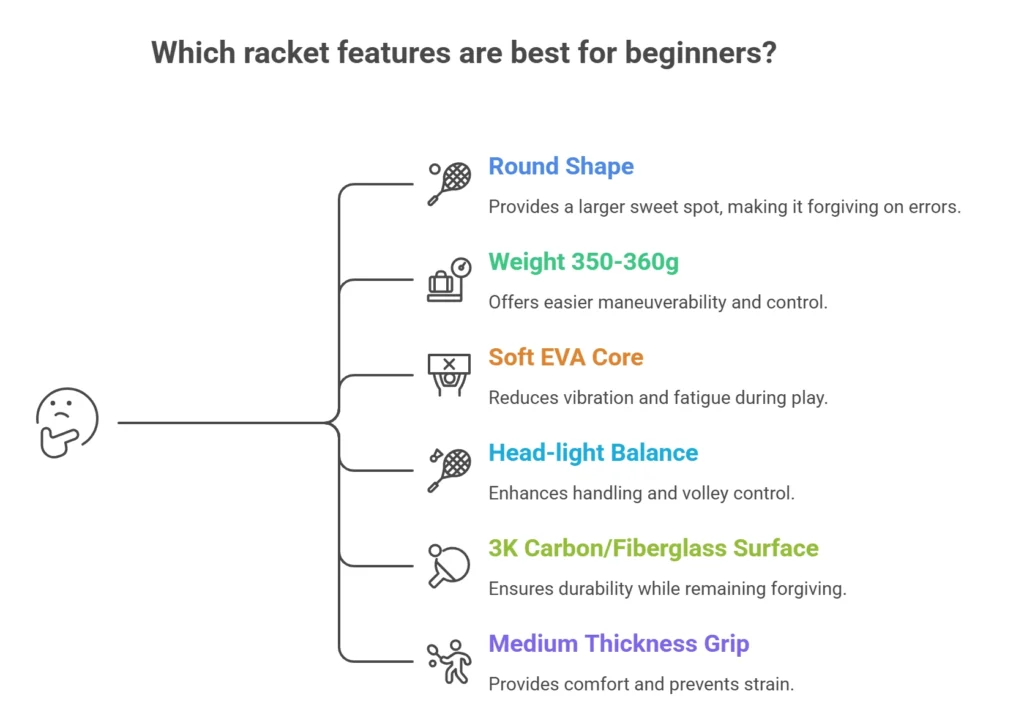
- Round shape rackets offer the largest sweet spot, making mishits less punishing.
- Avoid diamond-shaped rackets at first; the small sweet spot requires precise timing and advanced skill.
- Teardrop shapes are versatile but slightly less forgiving, suitable once you start rallying consistently.
Step 2: Consider Weight and Balance
Weight and balance determine how easy a racket is to handle and how stable it feels at impact.
Recommended Weight for Beginners
- 350–360g:Lightweight, ideal for women, juniors, and new players.
- 360–375g:Balanced weight for most adult beginners.
- 375g+:Heavy rackets are more suitable for advanced players with strong swings.
Balance Type
- Head-light:Weight closer to the handle; easier to control, forgiving on volleys.
- Even balance:Balanced performance for all-court play.
- Head-heavy:More power but requires precise timing; beginners often struggle.
Pro tip: Choose a head-light, lightweight racket to reduce fatigue and increase maneuverability.
Step 3: Choose the Right Core Type
The EVA foam core inside your racket significantly affects vibration, ball rebound, and comfort.
Core Type | Feel on Impact | Forgiveness | Best For |
Soft EVA | Cushioned & forgiving | High | Beginners & comfort-focused players |
Medium EVA | Balanced | Medium | Intermediates |
Hard EVA | Firm & reactive | Low | Advanced / attacking players |
Why it matters:
Soft cores absorb vibration, making learning strokes easier on your wrist and elbow. Hard cores produce sharper output but require precise timing and strength which is not ideal for beginners.
Step 4: Check Grip Size and Handle Comfort
Proper grip prevents forearm fatigue, wrist strain, and “padel elbow”.
Tips for grip selection:
- Choose a handle where your middle finger lightly touches your palm.
- Consider overgripsto adjust thickness.
- Look for handles with anti-vibration features.
Small adjustments in grip size can drastically improve comfort and control. Always test your grip before purchase.
Step 5: Evaluate Durability and Build Quality
Durability ensures your racket withstands frequent mishits and daily practice.
Things to check:
- Surface material:3K carbon or hybrid fiberglass-carbon offers durability with forgiving response.
- Frame protector:Reinforced edges prevent chips and scratches.
- Lightweight construction:Ensures easy handling without compromising strength.
Beginner rackets should balance resilience with ease of use, allowing you to focus on learning proper strokes without worrying about damage.
Bonus Tips for Beginners
Stick with one racket initially ,frequent changes hinder adaptation.
- Learn the sweet spot of your racket with practice drills.
- Monitor vibration feedback to improve contact consistency.
- Pair your racket with appropriate balls and shoes to reduce fatigue.
- Gradually increase swing power only after mastering control.
Quick Comparison: Beginner Racket Features
Conclusion
Selecting the right padel racket as a beginner is primarily about prioritizing comfort, control, and consistency over flashy designs or expensive models. By following a structured approach that evaluates shape, weight, balance, core type, and grip, you can significantly reduce mishits and protect your joints from injury while accelerating your skill development and gaining confidence on the court. To ensure long-term success, start with a round-shaped, soft EVA, head-light racket to focus on mastering the fundamentals properly, allowing you to gradually upgrade your equipment as your technique and power naturally improve.