
How To Get More Control On Your Padel Shots (7 Proven Ways)

Getting more control on your padel shots is the fastest way to win more rallies, reduce unforced errors, and dominate your opponents at the net. In padel, precision consistently beats raw power and in 2026, the best players at every level understand that padel shot accuracy is a learnable skill, not just a talent reserved for professionals.
After coaching sessions, testing rackets across multiple formats, and studying how top World Padel Tour players execute under pressure, the factors that separate controlled, precise players from erratic ones come down to a handful of key fundamentals. This guide breaks all of them down practically and clearly so you can take them straight to the court.
Pro Tip (2026): Padel is more about accuracy and ball placement than power. A well-placed soft shot into the corner beats a wild smash every time.
Why Padel Shot Control Matters More Than Power
Many players especially those transitioning from tennis arrive on the padel court trying to overpower their opponents. But the enclosed glass walls, smaller court dimensions, and the nature of doubles play in padel all reward placement and consistency over brute force.
Here is the reality: in a typical padel rally, most points are lost through unforced errors missed direction, hitting into the net, or failing to adapt after a wall rebound. Building better shot control eliminates these errors before they cost you the match.
Master the Continental Grip
The single biggest improvement most players can make to their padel shot control starts with their grip. The continental grip also called the hammer grip is the universal foundation of padel technique. Professional players across the World Padel Tour use it as their base grip for virtually every shot.
To find the continental grip, hold your racket as if you’re picking up a hammer. The V-shape formed between your thumb and index finger should sit on the top bevel of the handle (bevel 2 for right-handers). This neutral position means you never need to rotate your grip mid-rally to switch between forehands, backhands, volleys, or glass rebounds.
Why does this give you more control? Because a stable, consistent racket face at the point of contact directly translates into more predictable shot direction. Gripping too far into a forehand position a common mistake from tennis converts causes the racket face to close on contact, sending volleys into the net.
- Grip pressure to aim for:5 out of 10. Firm enough to control direction, relaxed enough to feel the ball and absorb vibration.
- Key fix:Slightly tighten at the moment of impact, then relax immediately after to maintain wrist mobility for the next shot.
- 2026 upgrade:Consider adding a Hesacore or ergonomic overgrip these anatomical grips stabilise your hand significantly and are now used by multiple WPT-level players to reduce arm fatigue and improve feel.
Pro Tip (2026): Replace your overgrip every 2–3 weeks if you play regularly. A worn, slippery grip is one of the most common hidden causes of poor shot control.
Slow Down Your Swing Speed
This sounds counterintuitive but reducing swing speed is one of the most immediately effective ways to improve padel shot accuracy. A long, fast swing dramatically increases the margin for error in your racket angle, contact point, and timing. A shorter, more compact stroke guided by the wrist and forearm gives you far tighter shot consistency.
The LTA Padel coaching framework consistently emphasises hitting with a short backswing on both forehand and backhand both to react more quickly and to generate more accurate ball placement. The same principle is used throughout professional doubles padel: you guide the ball, you do not blast it.
Practical drill: During your next warm-up, deliberately slow your swing by 40%. Focus purely on where the ball lands, not on how hard you hit it. Most players are surprised to discover that their placements actually improve significantly, and that controlled shots at 60% pace are harder for opponents to attack than wild shots at full power.
- Shorten your backswing:Keep the racket in front of you as much as possible.
- Guide the volley: At the net, you are redirecting the ball not striking it. Think ‘block and angle’ not ‘hit.’
- Follow through matters: Even on controlled shots, complete your follow-through. Stopping your swing short creates unpredictable contact and risks injury.
Prepare Early Every Single Time
Early racket preparation is arguably the most underrated control technique in padel. When you prepare your racket latereacting to the ball only when it’s already close your body does not have time to set the correct angle, and your footwork gets rushed. The result is off-balance contact and inconsistent direction.
Professional padel players read their opponent’s body position before contact is even made, allowing them to pre-position their racket for the incoming ball. This split-second advantage is what makes elite net play look effortless they are never rushing their preparation.
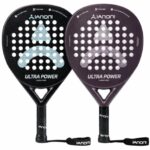
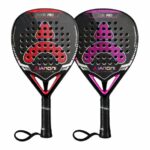
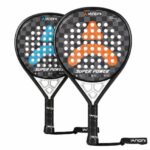
The habit to build: As soon as you identify the direction of your opponent’s shot, immediately rotate your shoulders and bring your racket back into position. Do not wait for the bounce. If you find your racket feels “heavy” or slow during this quick rotation, switching to a more aerodynamic and balanced frame like the Ianoni Force Pro can make that early preparation feel much smoother and more responsive.
This single adjustment can transform erratic groundstrokes into consistently placed, controlled drives.
Pro Tip (2026): Watch your opponent’s racket face and body position not just the ball. This gives you an extra 0.3–0.5 seconds of preparation time on every shot.
Improve Your Footwork and Court Balance
You cannot execute a controlled padel shot from an unstable base. Footwork is the engine that delivers your body to the right contact pointand without it, even a technically perfect swing produces unpredictable results.
The correct ready stance in padel: knees slightly bent, weight balanced on the balls of both feet, racket held in front of the body. From this position, you can push off in any direction quickly and arrive at the ball in time to set up a controlled contact point.
Pro Equipment Tip: If you struggle to stay agile during quick exchanges, consider using a round-shaped frame like the Ianoni Classic. Its lower balance point reduces “head heaviness,” making it significantly easier to maintain your ready stance and stay light on your feet.
A key principle that separates good padel footwork from great padel footwork: use small, quick adjustment steps rather than large lunging movements. Small steps sometimes called “split steps” keep your centre of gravity controlled so you can hit with a stable, accurate swing.
Stay light on your feet: Flat-footed players are always late. Weight on the balls of your feet equals faster reactions.
Use the split step: When your opponent makes contact, do a small jump/reset to rebalance before moving to the ball.
Recover after every shot: Return to a central, balanced position immediately.
Find and Hit Your Racket's Sweet Spot Consistently
Every padel racket has a sweet spot the zone on the face that produces maximum energy transfer with minimum vibration. Hitting the sweet spot consistently is one of the most direct routes to better shot control. Hit outside it, and you lose both direction and power simultaneously.
The location of the sweet spot varies by racket shape and this is where understanding your equipment directly improves your on-court performance. For round frames, the sweet spot sits centrally in the face. For diamond frames, it sits higher toward the top. For teardrop (hybrid) frames, it falls between the two.
A practical awareness drill: Before your next session, tap a ball gently against your racket face starting from different zones. Feel where the impact feels ‘hollow’ vs ‘solid.’ That solid, connected feeling is your sweet spot and training yourself to find it every rally is a skill worth developing.
- Round racket: Sweet spot is central very forgiving, ideal for control-focused play.
- Diamond racket: Sweet spot is high less forgiving, demands consistent technique.
- Teardrop racket: Sweet spot is mid-to-high balanced between forgiveness and precision.
Choose the Right Racket for Control
Your equipment has a direct, measurable impact on your shot accuracy. If you are playing with a head-heavy diamond racket designed for power, and your priority is control, you are fighting against your own equipment.
In 2026, the top control-oriented padel rackets feature round or teardrop frame shapes, low-to-mid balance points, and softer EVA foam cores (sometimes called ‘memory foam’ cores in the latest 2025/26 ranges). These materials absorb more energy on contact, giving you more dwell time the fraction of a second the ball sits on the strings which translates directly into better directional feel and placement.
Brands like HEAD, Babolat, and NOX have released 2025/26 racket lines that incorporate anti-vibration bridge technology (HEAD’s Auxetic 2.0 system is a notable example), specifically designed to increase feedback and stability on non-central hits. For players prioritising control, this technology makes a real, tangible difference.
- Frame shape:Round or teardrop for control, diamond for power.
- Balance point:Low or even (mid) balance for better maneuverability and precision.
- Core material:Softer EVA or rubber foam for more feel; harder EVA for more power rebound.
- Weight range: 355–370g for maximum racket speed and control at the net; 370–380g for baseline power.
Master Wall Rebounds
One of the most distinctive features of padel is the glass wall and learning to control shots off it is a skill that separates intermediate players from advanced ones. Many club players instinctively retreat when a ball bounces toward the back glass, rushing their shot and losing all control. The correct technique is the opposite.
When the ball comes off the back wall, move toward it rather than away from it let the wall do the work. Position yourself side-on to the glass, prepare your racket early, and allow the ball to drop to a comfortable contact height before playing. The back glass is not a threat it’s a tactical ally that, when mastered, gives you extra time to reset and play a controlled, placed shot back into the court.
- Read the speed:Slower incoming balls need you to move closer to the glass to meet them. Faster balls can be played slightly farther back.
- Side-on stance:Shoulder rotation is essential for controlled groundstrokes off the glass.
- Let it come to you:Rushing toward a wall rebound is the most common cause of mistimed, uncontrolled shots in padel.
- Use the lob as a reset:After a difficult wall rebound, a deep, accurate lob is your most controlled option to reset the point and get back into position.
Pro Tip (2026): Practice wall rebounds deliberately in solo warm-up. Hit the ball softly into the back glass and practice controlling the rebound from different distances. 10 minutes of this per session accelerates your feel significantly.
3 Practical Drills to Build Padel Shot Control Fast
To master control, you need to bridge the gap between theory and the court. These three drills are designed to build muscle memory and improve your “feel” for the ball, ensuring your movements become second nature under pressure.
Drill 1: The Slow Rally Drill
Rally with a partner at 50% pace. The goal is not to win points it is to place every single ball within a 1-metre target zone. Start with crosscourt rallies, then switch to down-the-line. This builds feel and directional awareness under zero pressure before you apply it in match play.
Drill 2: The Net Volley Angle Drill
Stand at the net while a partner feeds balls from the baseline. Your job: angle every volley into one of the four corners using only wrist and forearm no full swing. Focus on guiding, not hitting. This drill builds the core of padel net control in just 15 minutes per session.
Drill 3: Wall Rebound Positioning
Rally crosscourt, deliberately allowing the ball to pass you and hit the back glass. Practice retreating, reading the rebound, positioning side-on, and playing a controlled return.
Summary: Your 2026 Padel Shot Control Checklist
If you implement just two or three of these adjustments before your next session, you will notice an immediate improvement. Here is your quick-reference summary:
- ✅ Grip:Use the continental grip. 5/10 pressure. Replace overgrip every 2–3 weeks.
- ✅ Swing speed:Shorter backswing. Guide the ball. Complete the follow-through.
- ✅ Preparation:Read early. Get your racket up before the ball arrives at you.
- ✅ Footwork:Knees bent, balls of feet, split step, small quick steps.
- ✅ Sweet spot:Know where yours is. Train yourself to find it on every contact.
- ✅ Racket:Round or teardrop shape with low-mid balance for maximum control output.
- ✅ Walls:Move toward the rebound, not away. Side-on stance. Let it come to you.
Building padel shot control is a process but it is a fast one when you focus on the right fundamentals. Start with the grip, add early preparation, and watch your unforced errors drop within a few sessions. When you’re ready to upgrade your equipment, explore our complete range of padel rackets to find a frame that works with your technique, not against it.