
Best Racket Features for Players With Elbow or Arm Discomfort

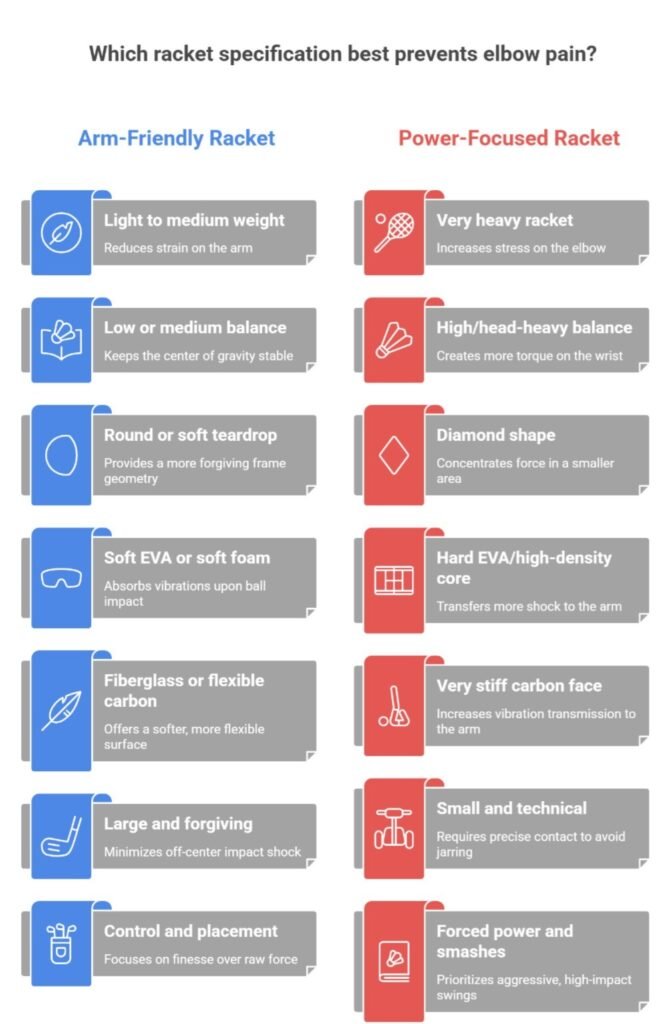
Choosing the best padel racket for elbow pain & arm comfort means looking for a racket that reduces shock, feels easy to swing, and supports clean contact without overloading your forearm. For most players, that means a lightweight, low-balance, round or hybrid racket with a soft EVA or foam core, flexible face, large sweet spot, and comfortable grip setup.
Elbow pain in racket sports often connects to repeated gripping, wrist movement, and forearm overload. Tennis elbow, also called lateral epicondylitis, commonly causes pain around the outside of the elbow and may worsen with gripping or wrist movement. That is why the right padel racket matters: it cannot “cure” elbow pain, but it can reduce unnecessary vibration, strain, and mishits that make playing uncomfortable.
After testing different racket shapes, weights, cores, and grip setups, the most arm-friendly rackets usually share one thing: they prioritize comfort and control over raw power.
Why Racket Features Matter for Elbow Pain
Padel looks easier on the arm than tennis because the court is smaller and the swing is shorter. However, padel still involves repeated volleys, defensive blocks, bandejas, smashes, and quick wrist adjustments. If your racket is too stiff, too heavy, or too head-heavy, your elbow and forearm must work harder on every shot.
For players dealing with elbow discomfort, the goal is simple: reduce impact stress and improve handling.
The best arm comfort padel racket should help you:
- Hit the sweet spot more often.
- Swing without forcing your wrist.
- Absorb vibration on off-center shots.
- Reduce forearm fatigue during long matches.
- Keep control without needing maximum effort.
This is why comfort-focused players should not simply buy the most powerful racket. A diamond-shaped, hard-core, high-balance racket may feel explosive, but it can also feel demanding if your elbow is already sensitive.
Choose a Lightweight Padel Racket First
Weight is one of the first things to check when choosing the padel racket. A racket that feels heavy during a short test may feel much worse after 60–90 minutes of volleys, blocks, and overhead shots.
A lighter racket is easier to maneuver, especially during fast net exchanges. It also reduces the effort needed from your wrist, forearm, and shoulder. For many comfort-focused players, a racket in the light-to-medium range is a safer choice than a heavy power racket.
However, do not go too light without testing. Very light rackets can sometimes feel unstable against fast balls, which may force you to grip harder. The right choice should feel stable but not tiring.
Pick Low Balance or Medium Balance
Balance tells you where the racket’s weight sits. STIGA explains that low-balance rackets place more weight toward the handle, which improves control and makes the racket easier to handle, while high-balance rackets place more weight toward the top for extra power but require more strength and technique.
For elbow pain, low balance is usually the safest starting point. It makes the racket feel lighter in the hand, even if the actual weight is not extremely low. This helps reduce stress during defensive shots, volleys, and quick reactions.
A medium-balance racket can also work if you want a little more attacking support. But if your elbow is currently sensitive, avoid very head-heavy rackets until your technique, strength, and recovery improve.
Simple Test:
Hold the racket in your normal grip and make 10 slow shadow volleys. If your forearm tightens quickly or the racket pulls your wrist forward, the balance may be too high for your arm.
Go for a Round Shape or Comfort Teardrop
Racket shape affects sweet spot, control, and power. Macron notes that control-focused players are generally suited to round-shaped rackets with a lower balance point, while diamond-shaped rackets are more power-focused with higher balance.
For elbow comfort, round rackets are usually the most forgiving. They often have a larger central sweet spot, which helps reduce the shock from off-center hits. That matters because mishits send more vibration into the hand, wrist, and elbow.
A teardrop racket can be a good middle option if it has soft materials and medium balance. Avoid aggressive diamond rackets if your priority is elbow protection.
Select a Soft EVA Core or Soft Foam Core
The core is one of the most important comfort features. Macron describes the core as the inner material between the face and frame, often EVA foam or foam rubber, and notes that it affects vibration, ball response, and overall feel.
Soft EVA and soft foam cores absorb more impact than hard cores. Red Bull also notes that soft foam provides more comfort and shock absorption, reducing vibrations and making the racket easier on the arm, especially for beginners or injury-prone players.
A hard core may give more power and a faster response, but it also sends more feedback into the arm. If elbow comfort is your main priority, choose comfort before power.
Best Core Choice by Player Type:
- Current elbow pain: soft foam or soft EVA.
- Mild discomfort only: soft-to-medium EVA.
- No pain but prevention-focused: medium EVA with flexible face.
- Advanced power player: medium EVA, not ultra-hard, with low or medium balance.
Choose Fiberglass or Flexible Carbon Face
The hitting surface changes how the racket feels at impact. Fiberglass is generally softer and more flexible than carbon. STIGA describes fiberglass as a material that provides control and softer hits, contributing to a cushioned and comfortable playing experience. Red Bull also describes fiberglass rackets as softer, more flexible, and more forgiving, especially for beginners and intermediate players.
For elbow pain, fiberglass is often a smart choice because it absorbs impact better and feels less harsh on off-center shots.
Carbon is not always bad, but very stiff carbon rackets can feel demanding. If you want carbon, look for flexible carbon, lower-density carbon, or a hybrid face that combines comfort and control.
Look for Anti-Vibration Technology
Many modern rackets include vibration-reduction systems in the frame, bridge, handle, or core. These can help make the racket feel smoother, especially when you miss the center of the face.
Anti-vibration features may include:
- Dampening inserts in the frame.
- Shock-absorbing bridge design.
- Soft grip technology.
- Foam-filled frame channels.
- Replaceable vibration reducers.
- Comfort wrist straps.
Do not choose a racket only because it says “anti-vibration.” Instead, combine this feature with the full comfort package: low balance, soft core, forgiving shape, and correct grip.
A stiff, head-heavy racket with a small anti-vibration insert may still feel worse than a soft, round, low-balance racket without fancy marketing.
Check the Grip Size and Overgrip Setup
Grip setup is often ignored, but it can make a big difference. If your grip is too thin, you may squeeze harder to control the racket. If it is too thick, your wrist and forearm may feel restricted.
Red Bull notes that most padel rackets come with a standard handle size designed to suit many players. Still, comfort depends on your hand size, sweat level, grip pressure, and playing style.
For elbow comfort, the grip should let you hold the racket securely without squeezing. Many players with arm discomfort benefit from adding one quality overgrip or using a slightly cushioned grip.
Prioritize a Large Sweet Spot
A large sweet spot is essential for an elbow-friendly padel racket. When you hit outside the center, the racket twists more and vibration increases. That extra shock can travel into the hand, wrist, forearm, and elbow.
Round rackets usually offer the largest and most forgiving sweet spot. This makes them ideal for beginners, intermediate players, and anyone returning after elbow pain.
A forgiving sweet spot also helps you relax your grip. When you trust the racket, you stop muscling the ball and start guiding it.
Prioritize a Large Sweet Spot
A large sweet spot is essential for an elbow-friendly padel racket. When you hit outside the center, the racket twists more and vibration increases. That extra shock can travel into the hand, wrist, forearm, and elbow.
Round rackets usually offer the largest and most forgiving sweet spot. This makes them ideal for beginners, intermediate players, and anyone returning after elbow pain.
A forgiving sweet spot also helps you relax your grip. When you trust the racket, you stop muscling the ball and start guiding it.
Final Buying Advice
The best features are not about buying the softest or most expensive racket. They are about choosing the right combination: low balance, manageable weight, forgiving shape, soft core, flexible face, large sweet spot, and comfortable grip.
For most players with elbow discomfort, a round or soft teardrop racket with soft EVA, fiberglass, and low-to-medium balance is the smartest choice. It gives you control, comfort, and enough performance to enjoy the game without forcing your arm to work harder than it should.