
How to Return the Padel Smash: 5 Steps That Work

Returning the padel smash is one of the hardest skills in the game and one of the least practised . Most club players treat an opponent’s overhead as an automatic winner and concede the point prematurely. In reality, nearly every smash below the professional level is returnable if you can read the attacker’s intent and master your positioning.
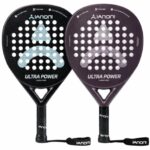
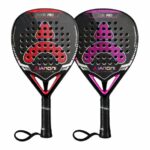
These 5 steps break down the entire return sequence, from reading the ball before impact to the footwork that neutralizes aggressive overheads.While your technique is the priority, using padel rackets with a balanced weight distribution will give you the maneuverability needed to react to these high-speed shots. Together, the right tactics and gear transform a demoralizing defensive moment into a genuine counter-attacking weapon.
Returning a smash is not about matching power with power. It is about anticipation, positioning, and choosing the right ball before the smash even lands.
Know What You are Defending Against — Smash Types and Return Strategies
Not every smash demands the same response. Recognising the type of overhead coming at you is the foundation of a smart return.
To keep this guide professional and easy to scan, I have translated the table into a set of actionable defensive tactics. I have focused on the active relationship between what your opponent hits and how you should respond.
Smashing the Smash: Your Defensive Playbook
Defending against high-level overheads is not just about survival; it is about regaining the net. Here is how to counter the most common attacking shots:
Countering the Flat Power Smash: When an opponent hits with pure pace, your best return is a deep defensive lob. This buys you crucial time to reset your positioning and forces the attacker to hit a second, more difficult overhead from a deeper position.
Neutralizing the Vibora (Spin Overhead): Because these shots curve sharply after hitting the glass, you should aim for a Par 3 wall lob. By using their own spin against them, you can lift the ball high and move the attackers back into their defensive half.
Defending the Bajada Counter-Smash: When an opponent brings the ball down hard off the back glass, the best strategy is to let the ball pass and use the glass. Allowing the wall to neutralize the pace gives you a controlled rebound to work with.
Responding to a Controlled Bandeja: These are often hit deep into the corners to keep you pinned. Focus on a low return to the feet of the approaching players. This “short ball” forces them to hit upward, disrupting their aggressive net position.
Handling the Body Smash: If the ball is aimed directly at your chest or hips, step back and block the return. Using a round-shaped frame like the classic rackets provides the stability needed to absorb high-impact shots without the racket twisting in your hand.
Read the Smash Before It Happens
The single biggest difference between players who return smashes and those who do not is not reaction speed it is anticipation. By the time the ball leaves your opponent’s racket at full overhead pace, it is already too late to start moving. You need to read the smash 0.5 to 1 second before contact.
What to Watch
- Shoulder rotation:A full shoulder turn toward the non-dominant side signals a flat power smash. A more open, forward-facing shoulder often precedes a bandeja or vibora.
- Racket take-back height:High elbow and racket above the shoulder means maximum power is coming. A lower preparation often signals a controlled slice overhead.
- Ball position relative to the hitter:A ball behind the shoulder almost always produces a cross-court smash. A ball directly above produces a straight drive. A ball slightly in front gives you the best chance of a down-the-line shot.
- Hitter’s court position:An opponent who has retreated toward the service line for the overhead has less angle. One who is closer to the net has more dangerous angles available.
👁️ Training Habit: During practice, call out the smash direction before it lands. Do this for 10 minutes per session and your anticipation will measurably sharpen within two weeks the eyes and brain build pattern recognition faster than most players expect.
Take Up the Right Defensive Position
Where you stand when the smash lands determines almost everything about the return you can make. Most club players instinctively back away toward the glass wall which is often exactly the wrong place to be.
The Two Defensive Zones
- Zone A (Mid-court 2–3 metres from back glass):Use this for flat, hard smashes directed at the court floor. You intercept the ball before it reaches the glass, cutting off the angle and blocking it back with pace already on the ball.
- Zone B (Close to back glass (30–50 cm):Use this when the smash is likely to bounce high off the back wall. You let the glass do the work the rebound gives you a ball at a manageable height to play a controlled lob or bajada return.
The mistake most players make is stopping halfway between these two zones, which gives you neither the interception angle of Zone A nor the clean rebound of Zone B. Commit to one zone before the smash lands.
📍 Positioning Rule: If you are unsure which zone to use, default to Zone B. Letting the ball come off the glass gives you more time and more options than trying to intercept a ball that bounces awkwardly past you.
Use the Split Step to Load Your Legs
The split step is not optional in padel defence it is the mechanical foundation of every fast reactive movement. Yet the majority of club players stand flat-footed while waiting for an overhead, which means their first step is always a fraction too slow.
Your split step should land the instant your opponent’s racket makes contact with the ball overhead. Both feet hit the court simultaneously, slightly wider than shoulder width, with your knees softly bent and weight forward on the balls of your feet. This pre-loaded position reduces your reaction time to any direction by 15 to 25% compared to a flat-footed stance a difference that is measurable and tactically significant at padel speed.
- Timing: Split step on your opponent’s contact not before, not after.
- Width: Feet slightly wider than shoulders too narrow limits lateral push; too wide slows your first step.
- Weight:Forward on the balls of your feet, never flat or back on your heels.
- After the split step: Drive immediately toward your target zone A or B with a decisive first step.
Choose the Right Return And Commit to It
You have read the smash, taken your position, and loaded with the split step. Now comes the decision most players get wrong: they try to be too clever, change their mind mid-swing, and produce a half-committed return that goes nowhere useful. In padel defence, an average shot played with full commitment beats a perfect shot played with hesitation every time.
Your Three Return Options, Ranked by Safety
- The deep defensive lob (highest percentage):Hit high and deep to the back corner, forcing your opponent to smash again. This is not giving up it is resetting the point on your terms and buying time to recover your position.
- The par 3 wall lob (medium–high percentage):From a deep defensive position, send the ball cross-court so it hits the side wall and rebounds into the corner. Creates an angle your opponent cannot easily reach and it is far more available from Zone B than most players realise.
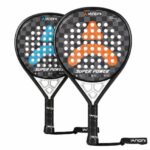
- The low block return (medium percentage, high reward):When the ball sits up from the glass at a manageable height, drive it low back toward the net player’s feet. This is the return that genuinely punishes a smash, but it demands clean contact. To maximize the ‘pop’ on a counter-attack, advanced players often choose the Super Power for the high-density carbon fiber required to turn the opponent’s pace back against them.
🎯 Decision Rule: If you are in doubt between options, always choose the deep lob. It extends the rally, forces another overhead from your opponent, and gives your pair time to recover court position. Errors on low block returns from pressure positions lose more points than conservative lobs ever do.
Recover Your Court Position Immediately After Returning
Most players watch their return travel and hope for the best. The best defenders in padel are already moving before the ball lands. The return is not the end of the sequence it is the beginning of the next one.
After any defensive return from the back of the court, your target recovery position is the T-line: the centre line of your half, roughly one metre behind the service line. This position gives you equal coverage of both sides of the court and puts you in the best spot to deal with whatever your opponent does next another smash, a soft drop, or a cross-court drive.
- After a deep lob:Move immediately forward toward the T-line. Do not wait to see if the lob is good.
- After a par 3 wall lob:Move toward the centre the ball’s angle will force your opponent wide, and the centre is where you want to be.
- After a low block return: Charge the net if your return is clean and low. A good low block often produces a weak reply be there to punish it.
- Communicate with your partner:Call ‘mine’ or ‘yours’ during the return sequence. Defence in padel doubles breaks down most often when both players react to the same ball and neither covers the recovery position.
🔄 Recovery Drill: After every defensive return in practice, sprint to the T-line before the next ball is fed. Do this until the recovery movement becomes instinctive within four to six weeks, your court coverage will be visibly sharper.
Choose the Right Racket for The 5-Step Return Checklist — Use This in Your Next Match
Run through this mentally before every rally as your opponent moves to smash:
- Read the shoulder rotation and racket prep straight or cross-court?
- Choose your defensive zone intercept (Zone A) or use the glass (Zone B)?
- Land the split step on your opponent’s contact, feet wide, weight forward.
- Select your return deep lob, par 3, or low block. Commit fully. No changing mid-swing.
Recover to the T-line before the next ball, not after.
Final Word: Make Defenders Fear the Smash
The padel smash feels like an automatic point. That is exactly why returning it consistently is such a powerful weapon it demoralises attackers, extends rallies they expected to win instantly, and shifts the psychological momentum of a match in your favour.
Mastering these five steps does not require elite athleticism. It requires pattern recognition, deliberate positioning, and the discipline to commit to a return rather than hoping for the best. Start with the split step and the deep lob. Build from there. Within six weeks of focused practice, smashes that used to end your rallies will start looking like opportunities.
Every time you return a smash your opponent thought was a winner, you win more than the point. You win the mental game for the rest of the set.